


Rotating Trays Weight Sorting Machine Cut Labor Cost Up to 60% for Food Processing Plants
As food processing companies face rising labor costs and increasing demands for production efficiency, automated weighing and sorting equipment is becoming an essential part of modern processing lines. The Rotating Trays Weight Sorting Machine provides an efficient solution for automatically weighing, grading, and sorting individual food products according to their weight.
Also known as a box-type weight sorting machine, tray-type weight sorter, or automatic weight sorting machine, this equipment uses individual trays or boxes to carry products through a high-precision weighing and sorting process. It is widely suitable for seafood, poultry, meat, fruits, vegetables, and other food products that require accurate weight classification.
By replacing repetitive manual weighing and sorting operations with automated processing, the machine can help food processing plants significantly reduce labor requirements. Depending on the original production process and automation level, labor costs may be reduced by up to 60%.
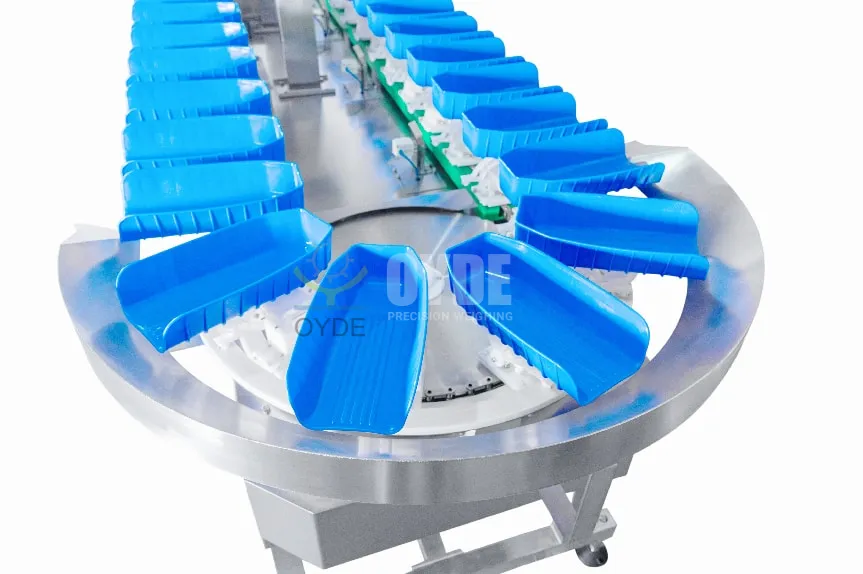
What Is a Rotating Trays Weight Sorting Machine?
A Rotating Trays Weight Sorting Machine is an automated system designed to identify the weight of individual food products and automatically distribute them into different weight categories.
Unlike traditional manual sorting, where workers need to repeatedly pick up, weigh, identify, and place products into different containers, the automatic tray sorting system performs these operations continuously.
Each product is placed into an individual food-grade tray or box. The tray moves through the weighing section, where a precision weighing system measures the product weight. The control system then compares the measured value with preset weight ranges and sends the product to the appropriate sorting outlet.
This design makes the machine particularly suitable for food products with different sizes and weights that need to be individually classified.
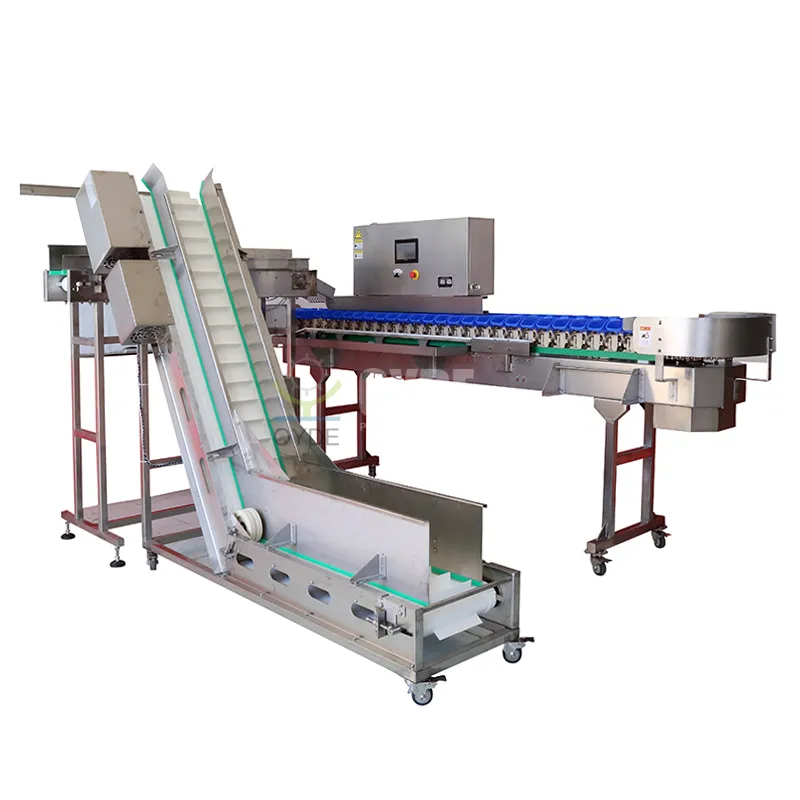
How Does the Box-Type Weight Sorting Machine Work?
The automatic sorting process can be divided into several key stages.
1. Product Loading
Products are manually or automatically placed into individual trays. The tray structure helps keep individual products separated during transportation and weighing.
This is especially useful for products such as shrimp, fish, poultry portions, meat cuts, fruits, and vegetables.
2. Automatic Weight Measurement
As the trays move through the weighing section, each product is accurately weighed by the machine's high-precision weighing system.
The weight data is transferred to the control system in real time.
3. Intelligent Weight Classification
The control system compares the measured weight with predefined weight ranges.
For example, a processing plant may configure several grades according to its product requirements:
Grade A: lightweight products
Grade B: medium-weight products
Grade C: standard-weight products
Grade D: heavyweight products
The number and range of sorting grades can be configured according to the application.
4. Automatic Weight Sorting
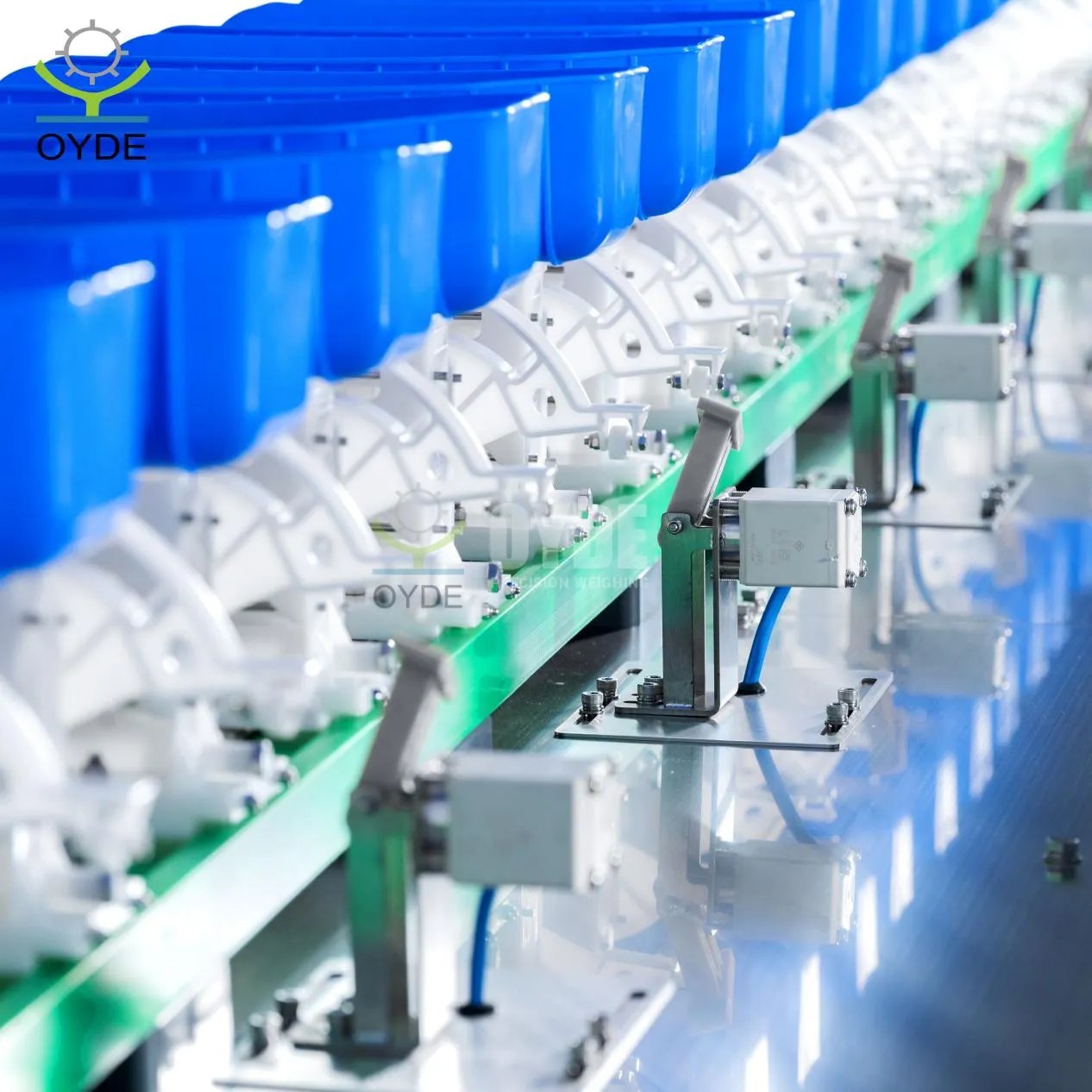
Once the product's weight category has been identified, the tray continues moving toward the corresponding discharge position.
The automatic sorting mechanism then transfers the product into the correct collection area.
5. Continuous Tray Circulation
After unloading, the tray can return to the circulation system and be reused for the next product.
This continuous operating principle allows the machine to perform weighing and sorting with significantly less manual intervention.
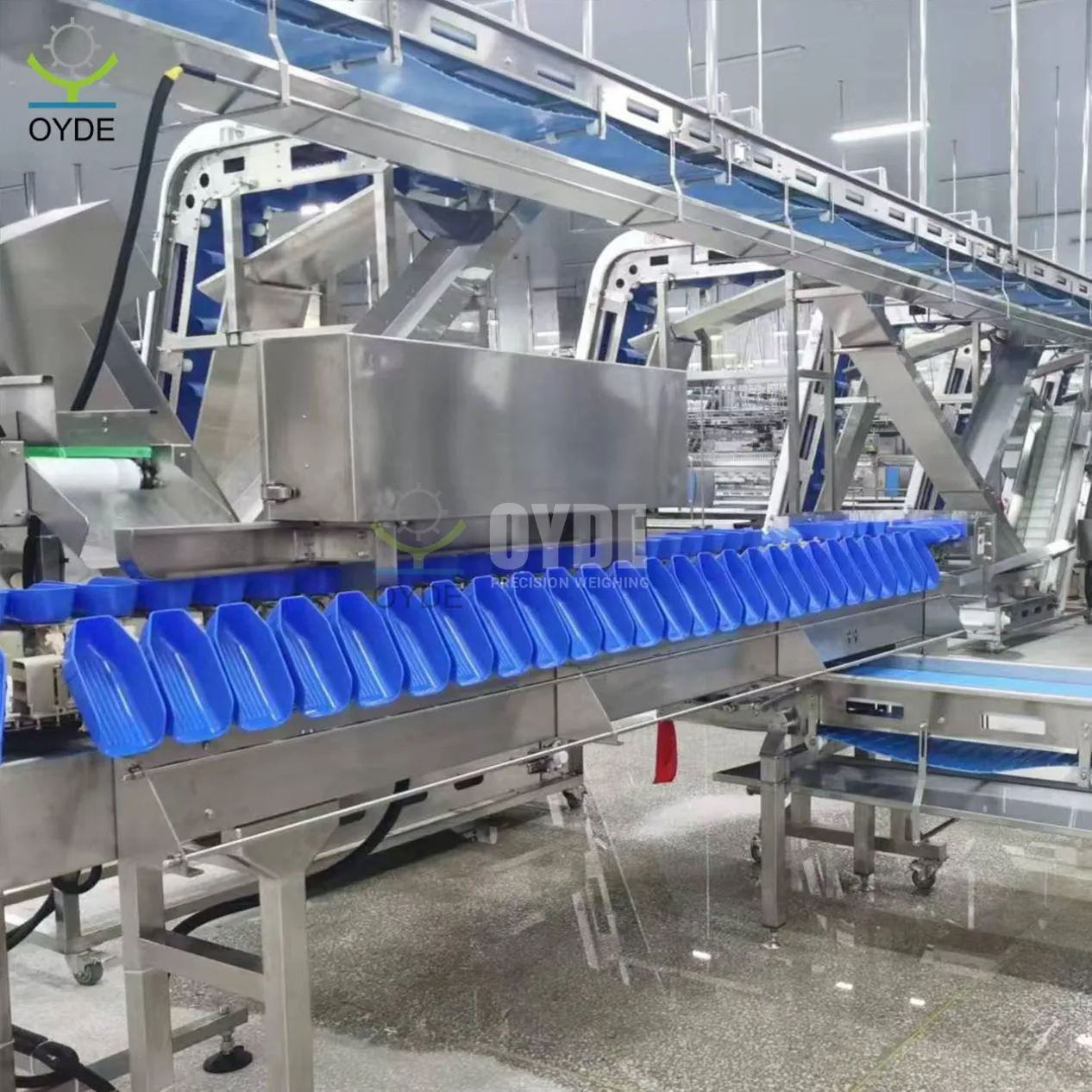
Why Use a Rotating Tray Weight Sorting Machine?
For many food processing plants, manual weight grading is one of the most repetitive operations on the production floor. As production volume increases, more workers may be required to maintain the required throughput.
A rotating tray weight sorting machine can address these challenges through automation.
Reduce Labor Costs
Manual sorting often requires workers to perform several repetitive tasks at the same time, including handling products, weighing, checking weight values, and placing products into different categories.
The automatic tray sorting machine integrates these operations into one automated process.
Depending on the existing production workflow, product type, production capacity, and number of workers replaced by automation, the system can potentially help reduce labor costs by up to 60%.
The actual labor savings should be evaluated based on the customer's production conditions.
Improve Weight Sorting Accuracy
Consistent weight classification is important for food processors selling products according to weight grades or fixed-weight specifications.
The automatic weighing system measures each product according to the same preset parameters, reducing inconsistencies that can occur during manual sorting.
This helps manufacturers achieve more stable weight grading and improve product uniformity.
Increase Production Efficiency
Manual weighing and sorting can become a bottleneck when production volume increases.
The rotating tray system allows products to be continuously transported, weighed, classified, and sorted. This helps maintain a stable production rhythm and makes it easier to integrate the sorting process into a larger automated production line.
Reduce Repetitive Manual Work
Workers no longer need to repeatedly read weight values and manually move products between different collection areas.
Instead, operators can focus on feeding, quality inspection, packaging, equipment monitoring, and other higher-value tasks.
Flexible Weight Grading
Different customers may have different product specifications and weight categories.
The control system can be configured with different target weight ranges to accommodate various production requirements.
This flexibility makes the equipment suitable for food processing plants producing multiple products or different weight grades.
Applications in Food Processing
The box-type weight sorting machine can be used in many food processing applications.
Seafood Weight Sorting
Seafood processing is one of the important applications for tray-type automatic weight sorting.
Products such as:
Shrimp
Fish
Crab
Squid
Shellfish
Other aquatic products
can be individually weighed and classified according to weight.
The tray structure is particularly useful for products that are difficult to handle consistently on conventional conveying systems.
Poultry Processing
The machine can also be used for chicken and other poultry products.
Individual poultry portions can be weighed and automatically separated into different weight grades before packaging or further processing.
Meat Processing
For meat products with different individual weights, automatic weight sorting can help manufacturers establish consistent product grades and improve downstream packaging efficiency.
Fruit and Vegetable Processing
Fresh fruits and vegetables can also be individually weighed and classified.
The system can be adapted to different product sizes and weight ranges according to the application.
Get a Quote
*RequiredPlanning to upgrade your weight sorting system?
Share your application details and our team will recommend a suitable solution.