


How Intelligent Box Checkweighers Optimize Quality Control for Food Gift Box Production Lines
In the food gift box industry, product consistency, accurate weight, and reliable packaging quality are essential for maintaining customer satisfaction and protecting brand reputation. Whether a gift box contains seafood, meat products, fruits, snacks, or other premium foods, every finished package must meet its specified weight and packaging requirements.
Traditional manual weighing and inspection can be slow, labor-intensive, and prone to human error. An intelligent box checkweigher provides an automated solution for inspecting the weight of finished gift boxes, helping food manufacturers improve quality control, reduce product giveaway, and increase production efficiency.
What Is an Intelligent Box Checkweigher?
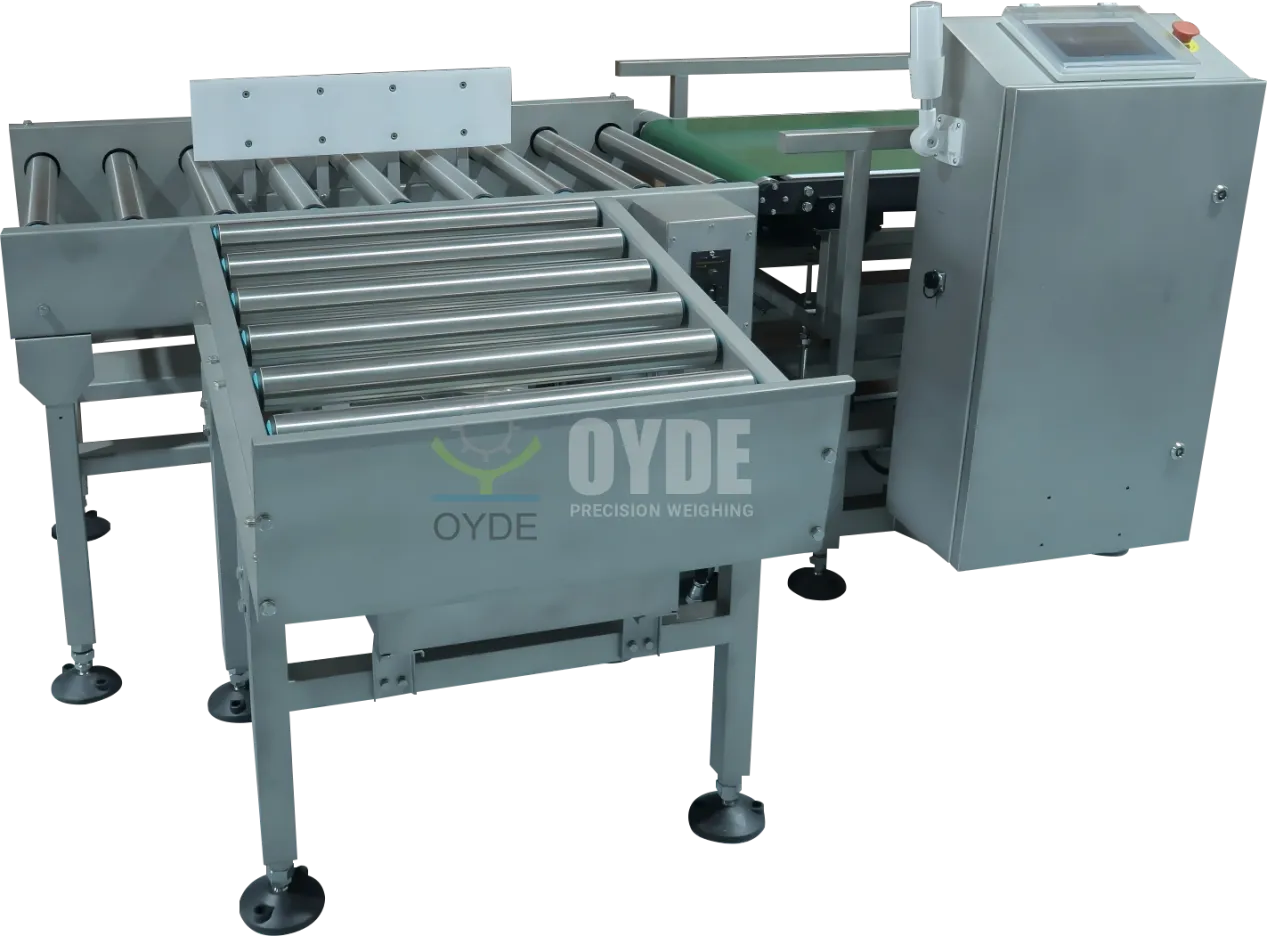
An intelligent box checkweigher is an automated weight inspection machine designed to check the weight of individual boxes or cases as they move through a production line.
After a food gift box is filled and sealed, the conveyor transports it through the checkweighing system. A high-precision weighing module measures the actual weight of each box and compares it with a preset target range.
Based on the inspection result, the system can automatically identify:
Underweight gift boxes
Overweight packages
Qualified products within the target range
Missing or incorrectly filled products
Abnormal packages requiring further inspection
Unqualified boxes can be automatically rejected, while qualified boxes continue to the next production stage.
Why Weight Control Matters in Food Gift Box Production
Food gift boxes often contain multiple products or ingredients. Even a small filling or product-count error can cause the final package weight to fall outside the required range.
For example, a seafood gift box may contain shrimp, fish, crab, or other products. A premium snack gift box may include several individually packaged foods. Manual inspection makes it difficult to maintain consistent weight when production volumes are high.
An automated box checkweigher helps manufacturers establish a more consistent quality control process.
1. Improve Weight Accuracy
The checkweigher continuously measures each box and compares its actual weight with preset parameters. This provides a more consistent inspection method than relying solely on manual weighing.
By identifying weight deviations during production, manufacturers can quickly detect filling or packaging problems before large quantities of products are affected.
2. Reduce Product Giveaway
Overfilling is a common source of unnecessary production costs. When workers intentionally add extra product to avoid underweight packages, the accumulated giveaway can become significant.
An intelligent checkweigher helps production teams monitor weight deviations and maintain tighter control over target weights. This can reduce unnecessary product giveaway while helping finished packages meet specified requirements.
3. Automate Underweight Product Rejection
Underweight packages may indicate missing products, insufficient filling, or other production problems.
With an automatic rejection system, boxes outside the acceptable weight range can be removed from the production line without requiring workers to manually inspect every package.
This improves inspection efficiency and helps prevent defective products from reaching subsequent packaging or shipping stages.
4. Increase Production Efficiency
Manual weighing requires operators to repeatedly place products on a scale, record results, and remove unqualified packages. This process can become a bottleneck in high-volume food production.
A box checkweigher performs continuous online inspection while products move through the conveyor system. This allows quality inspection to become part of the production process rather than a separate manual operation.
How Does a Box Checkweigher Work?
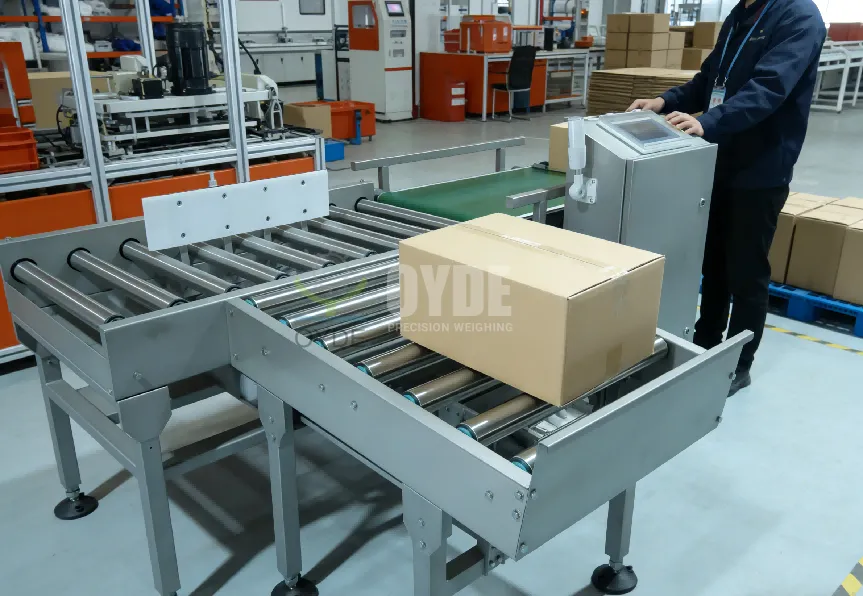
A typical intelligent box checkweighing process includes several key steps:
Step 1: Product Feeding
Sealed food gift boxes are transferred from the upstream packaging or conveying equipment onto the checkweigher.
Step 2: Product Separation
The conveyor system separates boxes to maintain an appropriate distance between products, helping ensure stable and accurate weighing.
Step 3: Dynamic Weighing
The box passes across a high-precision weighing section. The system measures its weight while the product is moving.
Step 4: Weight Comparison
The control system compares the measured weight with preset minimum, target, and maximum values.
Step 5: Automatic Sorting
If the box meets the required weight range, it continues along the production line. If it is underweight or overweight, the rejection mechanism can automatically remove it.
Step 6: Data Management
Depending on the system configuration, production data can be recorded and used for quality monitoring, production analysis, and process optimization.
Applications for Food Gift Box Production
Intelligent box checkweighers are suitable for many types of food gift box production lines.
Seafood Gift Boxes
Seafood gift boxes often contain products with different shapes and weights. Online checkweighing can help verify the total weight of finished packages and identify missing or insufficient products.
Meat and Poultry Gift Boxes
For packaged meat, chicken, duck, and other poultry products, weight inspection can help maintain consistency between packages and improve production quality control.
Fruit and Agricultural Product Gift Boxes
Fresh fruit gift boxes can vary naturally in individual product weight. Checkweighing provides an efficient way to verify the total weight of each finished package before shipment.
Snack and Specialty Food Gift Boxes
For mixed snack packages and premium food gift boxes, an intelligent checkweigher can help identify missing items or incorrect filling quantities through total package weight inspection.
Key Features of Intelligent Box Checkweighers
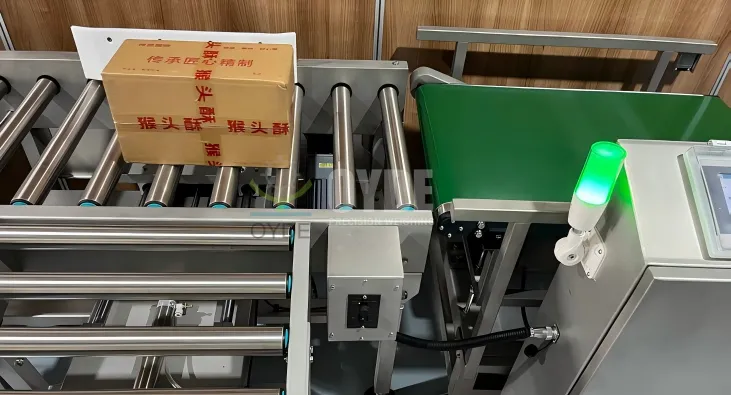
Modern checkweighing equipment can combine precision weighing, automatic conveying, rejection, and data management in one system.
Important features may include:
High-precision load cell weighing technology
Automatic online weight inspection
Adjustable target weight and tolerance settings
Touchscreen control interface
Automatic underweight and overweight rejection
Stainless steel construction for food-processing environments
Easy-to-clean conveyor design
Real-time production data monitoring
Automatic counting and statistical functions
Integration with upstream and downstream equipment
The exact configuration can be customized according to the product size, box weight, production speed, and line layout.
How Checkweighers Improve Quality Control
The biggest advantage of an intelligent box checkweigher is that it changes quality inspection from a sampling-based manual process into a continuous automated process.
Instead of checking only selected packages, manufacturers can inspect each box passing through the production line. This provides more comprehensive control over finished product consistency.
When abnormal weight trends are detected, operators can also investigate upstream processes such as filling, portioning, product counting, or packaging.
As a result, the checkweigher does more than simply measure weight—it can become an important quality control point within an automated food production line.
Reducing Labor Costs and Human Error
Labor availability is an increasing concern for many food processing and packaging factories. Repetitive weighing and inspection tasks require workers to perform the same operation continuously, which can affect efficiency and inspection consistency.
An automated box checkweigher reduces the need for repetitive manual weighing and allows operators to focus on equipment monitoring and production management.
Automation also minimizes errors caused by manual recording, inconsistent weighing procedures, and operator fatigue.
Integrating a Checkweigher into an Automated Packaging Line
An intelligent box checkweigher can be installed as part of a complete food gift box production line.
A typical process may include:
Product Preparation → Filling/Combination Weighing → Box Packaging → Sealing → Box Checkweighing → Automatic Rejection → Labeling → Cartoning → Shipping
When integrated with other automation equipment, the checkweigher can help create a more efficient and traceable production workflow.
For manufacturers producing multiple types of gift boxes, product parameters can also be configured according to different target weights and specifications.
Choosing the Right Box Checkweigher
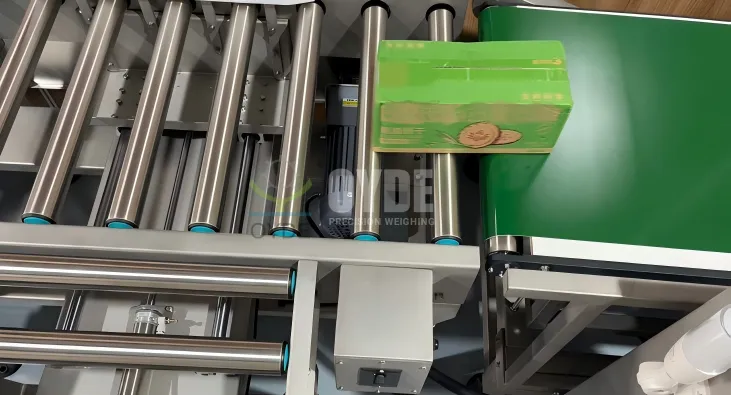
Before selecting a checkweighing system, manufacturers should consider several factors:
Product Weight: The weighing range should match the weight of the finished gift boxes.
Box Dimensions: Conveyor and weighing sections should accommodate the length, width, and height of the packages.
Production Speed: The machine should support the required boxes-per-minute production capacity.
Accuracy Requirements: Different products may require different weighing tolerances.
Packaging Material: The system should be suitable for cartons, plastic boxes, trays, bags, or other packaging formats.
Production Environment: For food processing applications, hygienic construction and easy cleaning are important considerations.
Line Integration: The checkweigher should be compatible with existing conveyors, packing machines, labeling equipment, and rejection systems.
Get a Quote
*RequiredPlanning to upgrade your weight sorting system?
Share your application details and our team will recommend a suitable solution.